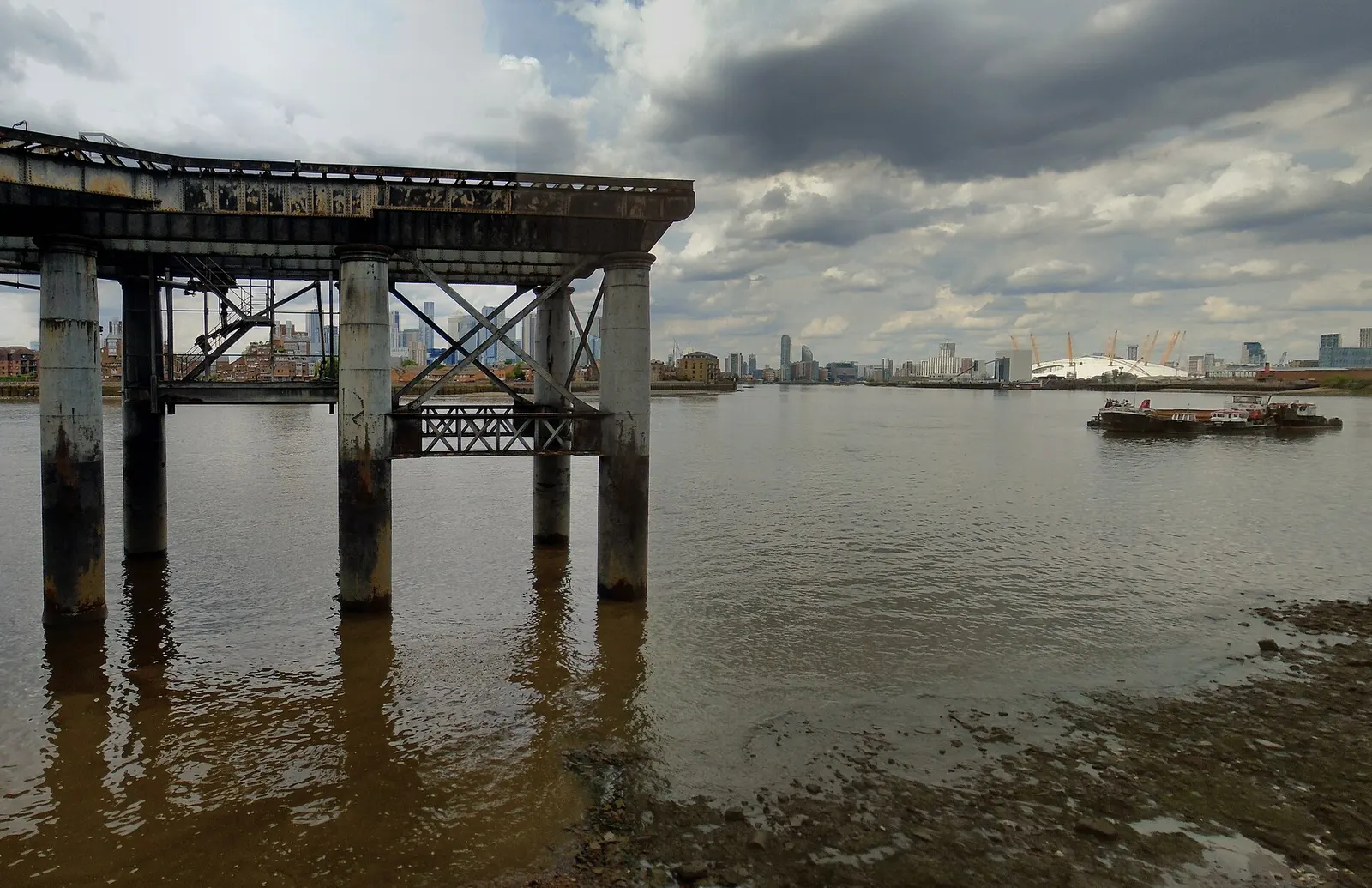
A gasworks peninsula
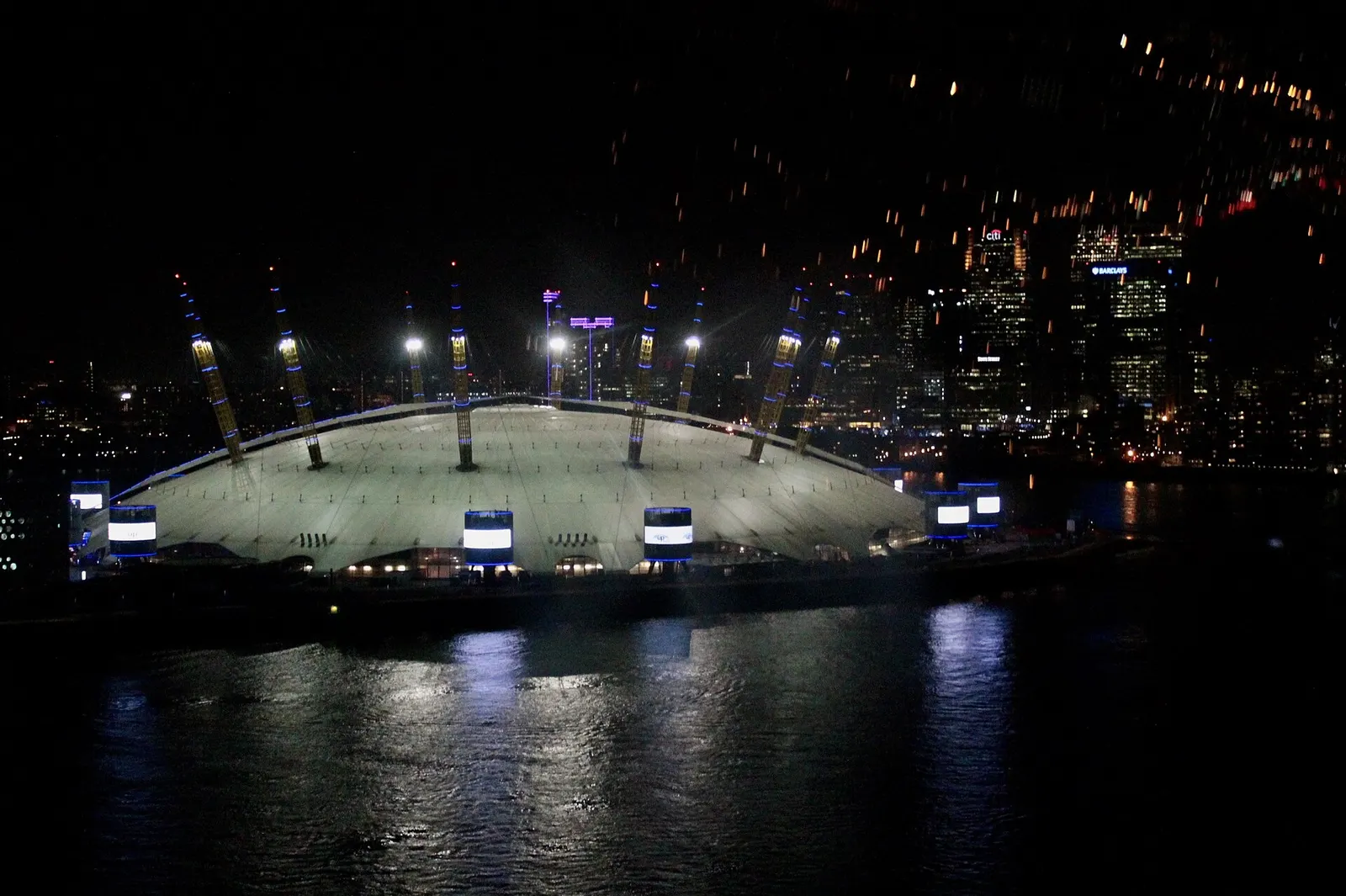
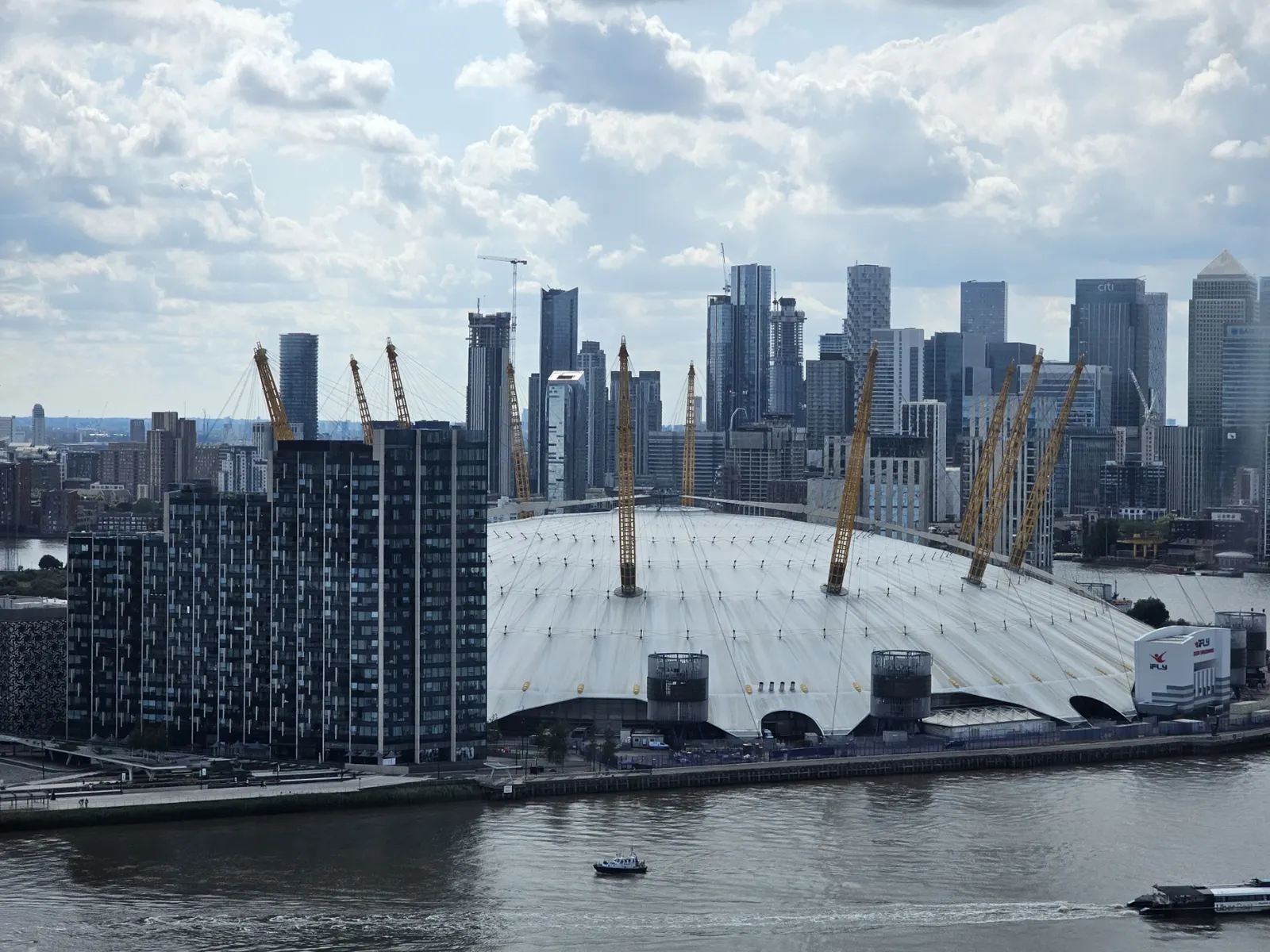
Before the Dome, the Greenwich Peninsula was derelict land, contaminated by sludge from the East Greenwich Gas Works, which ran from 1889 to 1985. The peninsula sits inside a loop of the Thames, with the Isle of Dogs to the west and Silvertown to the east, and the Prime Meridian passes the western edge of where the Dome now stands. The Blackwall Tunnel, opened in 1897, already ran beneath it.
The Millennium Dome
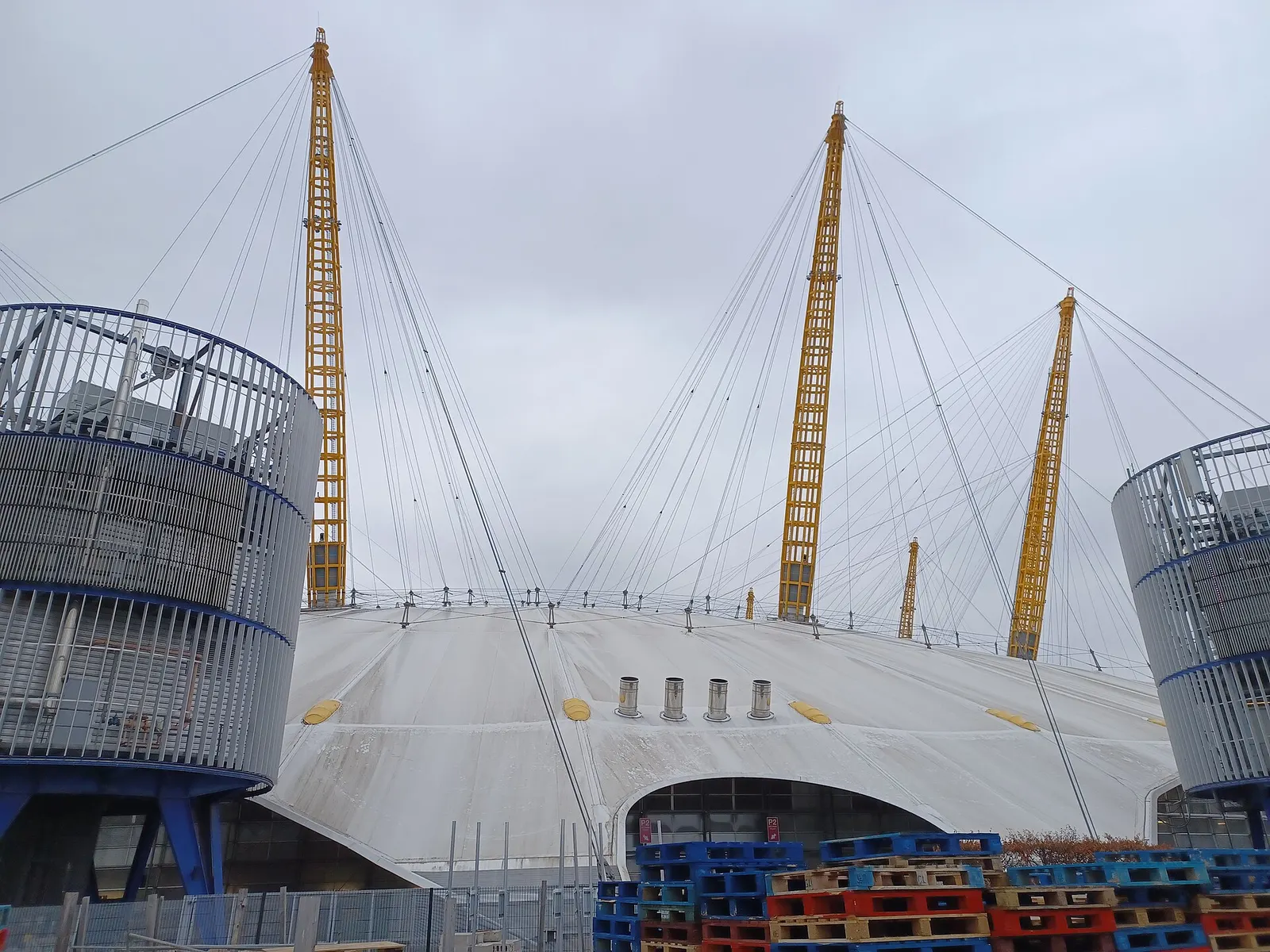
The Millennium Experience was announced in 1994 and the site chosen in 1996. The architect was Richard Rogers, the project was directed by Mike Davies, a partner in Rogers' practice (now RSHP), the structural and services engineers were Buro Happold, and the contractor was a McAlpine and Laing joint venture. The Dome was built in 15 months and delivered under budget; the structure itself cost £43 million. A Blue Peter time capsule was buried on the site in 1998, and dug up, damaged, during building work in 2017.
The Dome opened privately on New Year's Eve 1999 with a celebration attended by Queen Elizabeth II, and was open to the public from January 1 to December 31, 2000. Inside were 14 zones grouped under “Who We Are”, “What We Do” and “Where We Live”, and the Millennium Dome Show, with music by Peter Gabriel, was performed 999 times. The press widely called it a failure. Jonathan Meades dubbed it a “Museum of Toxic Waste”, the creative director had quit in 1998, the chief executive was sacked early in 2000, and on November 7, 2000 a gang tried to steal the Millennium Star diamonds from it, a raid the police foiled. When the company that ran it was wound up in 2002, the total cost was put at £789 million, most of it from National Lottery grants.
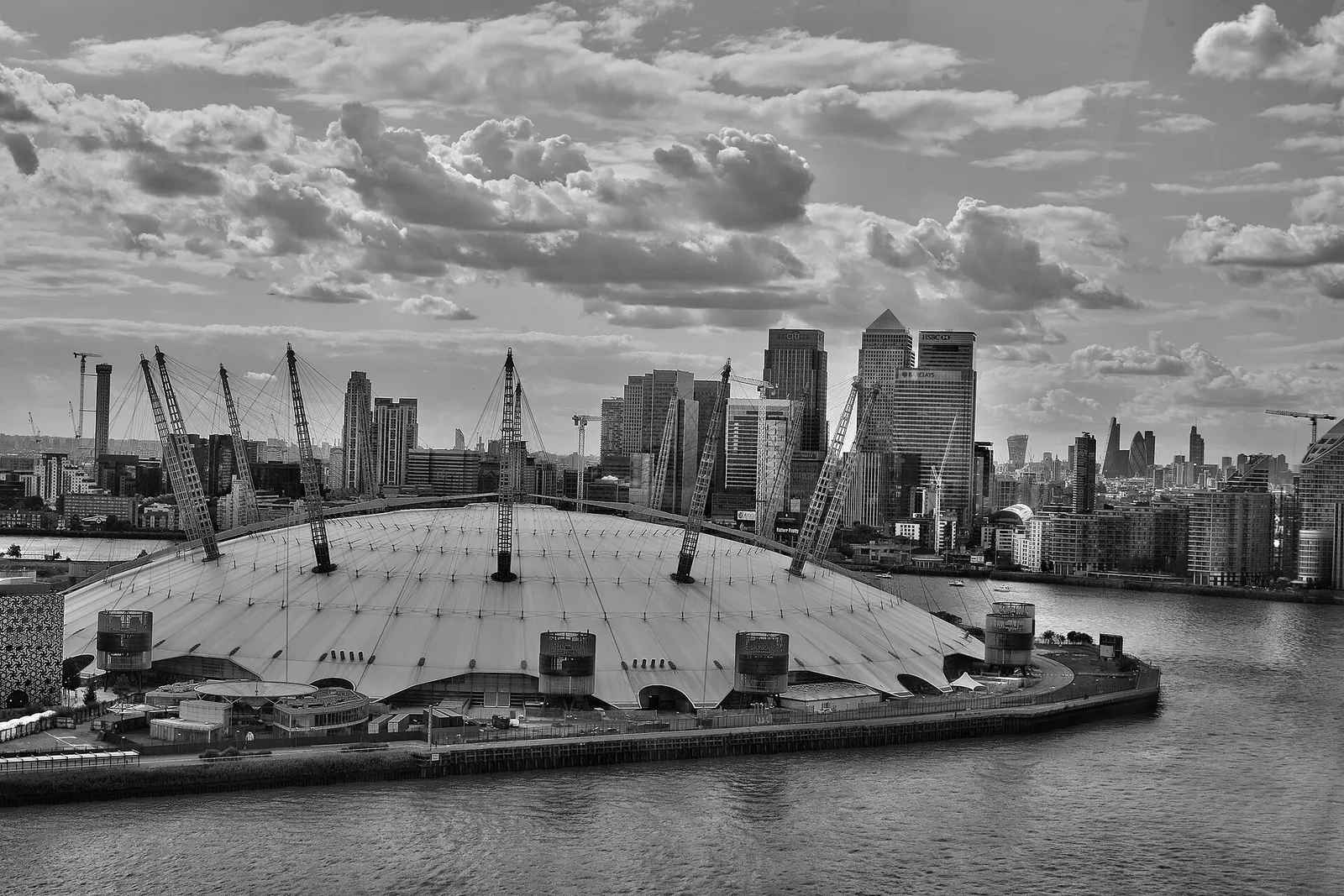
The empty years
After 2000 the exhibits were auctioned or given away. The building reopened briefly for a Winter Wonderland in December 2003, and over Christmas 2004 it was a homeless shelter run by Crisis. In 2001 the Dome had been leased for 999 years to Meridian Delta, a company of Quintain and Lend Lease, which was chosen in December 2001 to develop the site with the backing of Philip Anschutz's Anschutz Entertainment Group, AEG.
Building an arena inside a tent
AEG sub-leased the Dome for 58 years and built an arena inside it between 2003 and 2007. The architect was HOK Sport, now Populous, with Buro Happold again as structural engineer and Sir Robert McAlpine as contractor. Cranes could not be used under the canopy, so the arena's roof was built on the ground and lifted into place. The bowl was designed to cut down echo, the old weakness of concert arenas, and its seating can be reconfigured, so the floor can become an ice rink, a basketball court, an exhibition hall or a concert floor. The redevelopment cost £600 million.
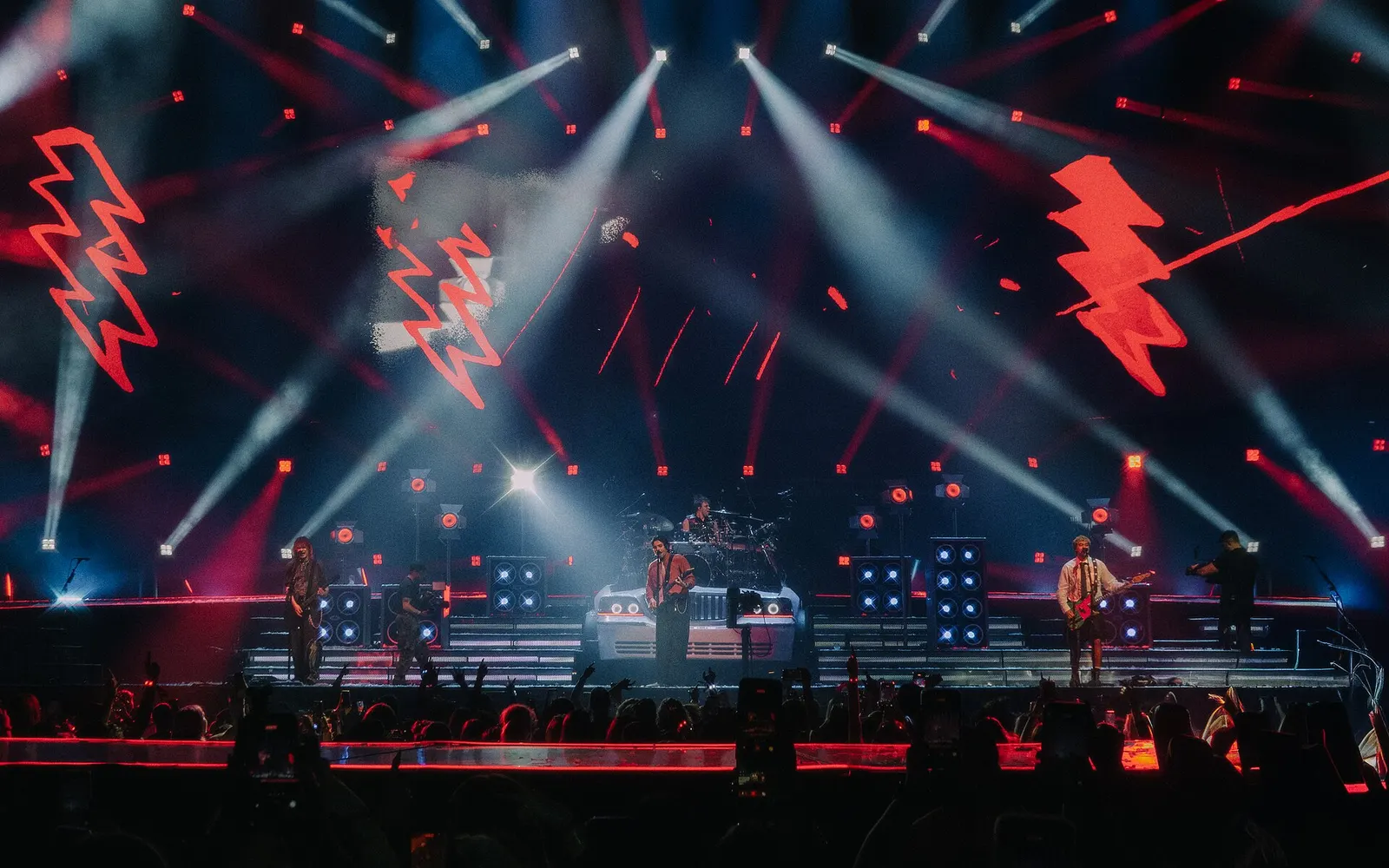
The phone company O2 took the naming rights in 2005, and the building became The O2 that May. The O2 opened to the public on June 24, 2007 with a Bon Jovi concert. The first film premiere followed in September 2007, High School Musical 2, and the first exhibition in the O2 Bubble, Tutankhamun and the Golden Age of the Pharaohs, in November.
The O2 today
AEG International owns and operates the arena and calls it “the world's most popular music and entertainment venue”. It won Pollstar's International Venue of the Year in 2016 and 2017. The rest of the tent holds indigo at The O2, a Cineworld cinema, Hollywood Bowl, more than 30 restaurants and bars and the outlet shops, opened in 2018. In 2009 Quintain and Lend Lease sold their interest in Meridian Delta to Trinity College, Cambridge. On October 7, 2026, AEG and O2 announced that O2 keeps the naming rights until 2038, which their release called the largest naming-rights renewal of its kind in UK history. The previous deal, agreed in February 2017, ran to 2027.
Where sources disagree
Wikipedia's Millennium Dome article gives both May 25 and May 31, 2005 for the day the name The O2 took effect; its article on The O2 gives May 25. Sources call the Dome's architect simply Richard Rogers or Richard Rogers' practice, now RSHP. The arena's own Wikipedia article does not name its opening act; Bon Jovi comes from the Millennium Dome and The O2 articles and from press coverage of the 20th anniversary.